
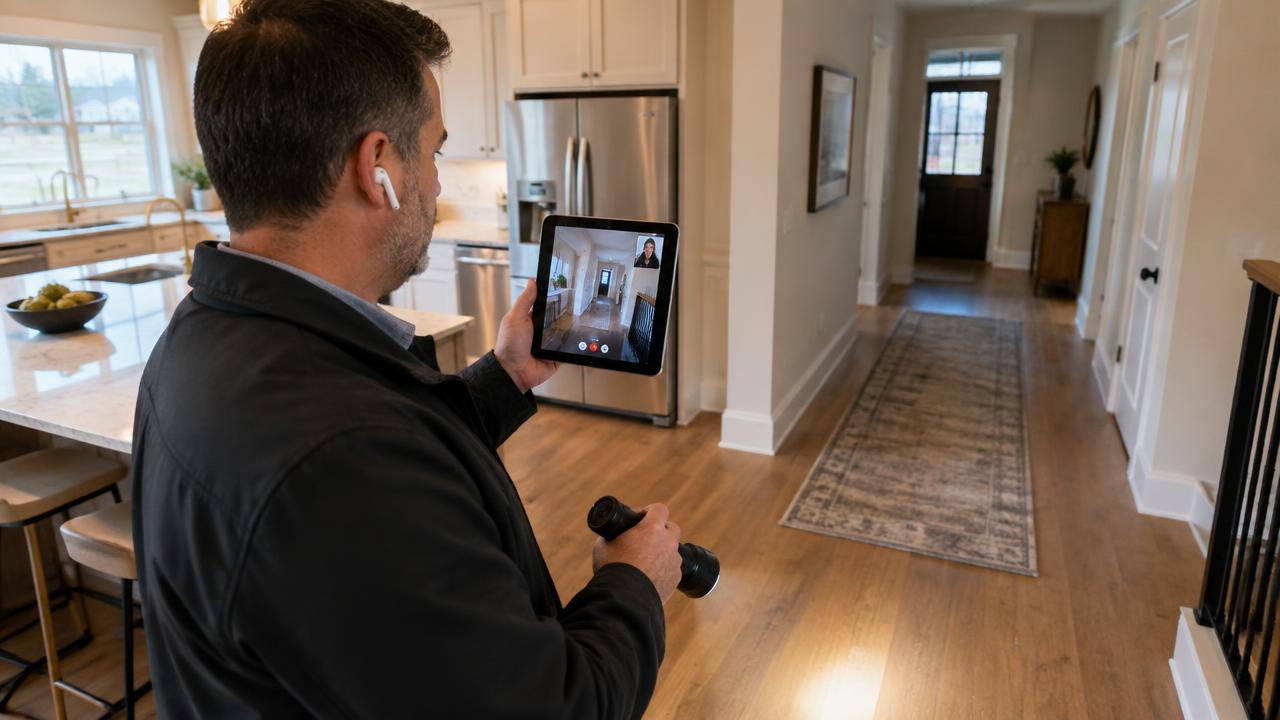
Home inspection technology is the set of tools inspectors use to examine, document, and report on a home's condition, and it has changed more in the last five years than in the previous thirty. The clipboard and film camera gave way to digital reports, then to smartphones and moisture meters, and now to live video walkthroughs, verified photo capture, and reports that assemble themselves while the inspection is still happening.
The biggest shift is not a gadget. It is that the inspector no longer has to be standing inside the home to inspect it. Live video inspection lets a qualified inspector direct a walkthrough remotely, see exactly what they need to see, and deliver a documented result the same day. That change is reshaping residential inspections for buyers, sellers, insurers, and lenders alike.
What is a virtual home inspection?
A virtual home inspection is a home inspection conducted over live video, where the inspector guides an on-site person — the homeowner, a buyer's agent, or a seller — through the property room by room. The inspector watches in real time, asks for close-ups of specific areas, captures photos and video as evidence, and produces a report from the session.
Virtual home inspections are most common in situations where speed or distance matters: insurance underwriting and renewal inspections, pre-listing checkups, draw inspections on renovation loans, re-inspections of completed repairs, and initial assessments where a full in-person inspection will follow. They are also used for homes in remote areas where inspector travel adds days and significant cost.
How does live video home inspection technology work?
The workflow is deliberately simple on the surface, because the technology has to work for a homeowner holding a phone, not just a professional:
Book and connect. The inspection is scheduled, and the on-site person receives a link by text or email. Tapping it opens the video session in a browser — no app download required on modern platforms.
Confirm the property. The inspector verifies the address, usually by asking to see the street number, and the platform stamps the session with GPS location and time.
Guided walkthrough. The inspector directs the tour: exterior, roofline, electrical panel, water heater, under sinks, attic, crawlspace. They ask the camera holder to slow down, hold steady, or move closer exactly as they would guide their own eyes in person.
Capture and annotate. The inspector snaps photos from the live feed, draws on the image to mark areas of concern, and records short clips of anything that needs to be documented in motion, like a running faucet or a tripping breaker.
Report. The captured evidence flows directly into the report. What used to take hours of evening paperwork now assembles during the session itself.
What technology do modern home inspectors use?
Today's residential inspection toolkit combines capture hardware with software that handles verification and reporting:
Live video inspection platforms. Purpose-built systems that combine the video call, guided checklists, evidence capture, and reporting in one record. This is the category our own Virtual Inspection Pro platform is built for.
Verified photo capture. Photos stamped with GPS coordinates and timestamps, with tamper-evident protection, so a photo genuinely proves where and when it was taken. This matters enormously for insurance and lending, where photo fraud is a real problem.
Thermal imaging. Infrared cameras that reveal moisture intrusion, missing insulation, and overheating electrical components that are invisible to the naked eye.
Moisture meters and electrical testers. The handheld instruments that turn a visual suspicion into a measured reading.
Drones. For roof and chimney assessment where ladders are unsafe or impractical.
AI-assisted reporting. Software that drafts report narratives from the inspector's findings and photos, cutting report delivery from days to minutes while the inspector reviews and approves every word.
What are the benefits for buyers, sellers, and insurers?
Buyers get speed. In competitive markets, waiting a week for an inspection slot can cost you the house. A virtual assessment can happen the same day you walk the property with your agent, and it tells you quickly whether a full in-person inspection is warranted.
Sellers get certainty. A pre-listing virtual inspection surfaces issues while there is still time to fix them on your own terms, rather than in the pressure of a buyer's negotiation.
Insurers get verified evidence. Underwriting and renewal inspections completed over live video come with GPS-stamped, timestamped photos that hold up far better than self-reported condition questionnaires, and claims can be triaged the day damage is reported instead of waiting for a field visit.
Lenders get faster draws. Renovation and construction draw inspections completed remotely release funds in hours instead of days, which keeps projects moving and borrowers happy.
Are there limits to virtual home inspections?
Yes, and honest inspectors are clear about them. A camera cannot smell mustiness, feel spongy subfloor, or probe a questionable rim joist. Invasive testing, radon and mold sampling, and sewer scopes still require physical presence. For a full pre-purchase inspection of an older home, most professionals recommend an in-person visit, with virtual tools used for the follow-ups, re-inspections, and documentation that surround it.
The practical model that is emerging is hybrid: live video handles the fast, visual, and time-sensitive work, and in-person visits are reserved for the inspections where hands and instruments genuinely add information.
Where is home inspection technology heading?
Three trends are converging. First, verification is becoming standard: as AI-generated images get better, the industry is moving toward captured-not-uploaded photos with cryptographic provenance, so every image in a report is provably real. Second, AI assistance is moving from novelty to normal, with software that flags potential defects in photos and drafts report language for the inspector to confirm. Third, acceptance is being written into policy, from insurer underwriting guidelines to state law — California's AB 1738 requiring remote inspection options at building departments is the clearest example.
The inspectors and organizations adopting these tools now are not replacing their expertise. They are multiplying it, completing more inspections, delivering reports faster, and building evidence trails that protect everyone involved. If you want to see what that workflow looks like in practice, start a 14-day free trial or browse our frequently asked questions.
Frequently asked questions
Is a virtual home inspection as good as an in-person one?
For visual assessment and documentation, it is highly effective, and the evidence trail is often better. For anything requiring physical testing, sampling, or invasive investigation, an in-person inspection remains the right tool. Many transactions now use both.
What does a home inspector need on a virtual inspection?
Just a computer and the inspection platform. The person on site needs only a smartphone with a camera and a reasonable connection, plus a flashlight for dark areas like attics and crawlspaces.
How long does a virtual home inspection take?
Most run 30 to 60 minutes depending on the size of the home and the scope, and because the report assembles during the session, results are typically delivered the same day.