
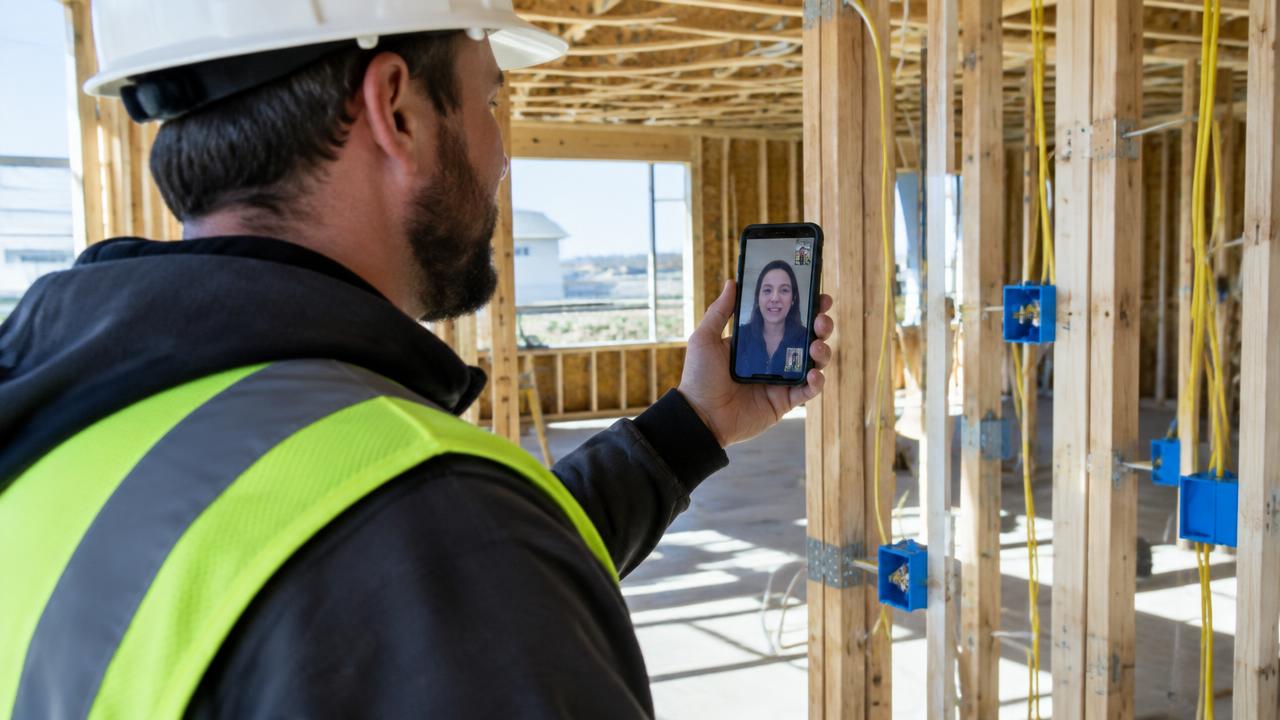
A virtual site inspection is a building or construction inspection conducted over live video, where the inspector directs you through the work from their office instead of driving to your job site. For contractors, the difference is measured in days: instead of waiting for an inspection window, losing a crew day to a failed visit, and re-scheduling around the inspector's route, you connect at a set time, walk the work, and often get your result before the call ends.
Contractors who prepare properly pass virtual site inspections at the same or higher rates as in-person visits. Contractors who treat them like a casual video call fail for avoidable reasons: poor lighting, a dead phone battery, the wrong person holding the camera, or missing paperwork. This guide covers how to be in the first group.
Which inspections can be done virtually?
It depends on your jurisdiction, but the inspections most commonly approved for virtual completion are residential and light commercial work that is primarily visual:
Water heater and HVAC changeouts
Electrical panel upgrades and rough-ins
Re-roofs and roof deck verification
Solar and battery storage installations
Footings, framing, insulation, and drywall in many jurisdictions
Final inspections for permits with no structural complexity
California's AB 1738 accelerates this: covered cities and counties must offer remote inspections for specified residential projects by 2028, and many departments already accept them today. Always confirm with your authority having jurisdiction before assuming an inspection can be virtual.
How do you schedule a virtual site inspection?
Most building departments that offer virtual inspections book them through the same portal as in-person visits, with a virtual or remote option at scheduling. You will typically provide the permit number, site address, inspection type, and the name and phone number of the person who will be on site with the camera.
Two scheduling habits separate smooth contractors from frustrated ones. First, book the inspection for a time when someone knowledgeable will actually be on site, not whoever happens to be around. Second, confirm the day before that the work is genuinely complete and ready. A virtual inspection that fails because the work is not done costs you the same re-inspection fee and schedule slip as a failed in-person visit.
What do inspectors check first on a virtual inspection?
Almost every virtual inspection starts the same way: the inspector asks you to show the posted street address on the building. This confirms the camera is at the permitted location, and it is the moment many unprepared contractors stumble because the address is not visible from where they are standing.
After location confirmation, the inspector works through their checklist in the same order they would in person. Expect them to direct the camera deliberately: pan slowly across the whole area, then hold steady on each specific item. The inspection moves at the inspector's pace, not yours.
How do you prepare the site to pass the first time?
Preparation is where first-time pass rates are won. Run this checklist before every virtual site inspection:
Charge the device and bring a backup. A phone at 15% battery is a failed inspection waiting to happen. Start above 80% and keep a charger or second phone on site.
Test the connection at the exact location. Walk to the panel, the attic hatch, the footing. If signal is weak there, know it before the inspector is on the call.
Light the work. Open blinds, turn on every light, and stage a flashlight or work light for panels, attics, and crawlspaces. Inspectors cannot pass what they cannot see.
Stage your tools. Tape measure, level, flashlight, and a ladder if anything is above head height. Have them in hand before the call starts.
Have the paperwork ready. Permit card, approved plans, manufacturer specs, and any prior correction notices. Inspectors routinely ask to see them on camera.
Clean the lens and the area. A smudged lens and a cluttered work area both read as unprofessional and slow the inspection down.
Put the right person on camera. Whoever holds the phone should know the work well enough to answer questions about what was installed and how.
What are the most common reasons virtual inspections fail?
Across departments running remote programs, the same failure patterns repeat:
The work genuinely is not code-compliant. Virtual does not mean easier. The checklist is identical to the in-person version.
The camera could not show what the inspector needed. Poor lighting, weak signal, or a contact who could not reach the area safely.
Missing documentation. The inspector asked for the approved plans or a spec sheet and nobody on site had it.
The wrong person showed up. A laborer who could not answer basic questions about the installation.
Notice that three of the four are preparation failures, not workmanship failures. That is good news: they are entirely within your control.
How much time and money do virtual site inspections save contractors?
The savings come in three places. First, schedule compression: many departments offer same-day or next-day virtual slots where in-person windows run days out, which means you close up walls and release crews sooner. Second, no waiting window: instead of a crew standing by for a four-hour arrival window, the inspection happens at a set time and typically takes 15 to 30 minutes. Third, fewer re-inspections: because you can prepare precisely and correct small issues in real time on the call, first-time pass rates improve.
For a contractor running several permits a month, removing even two or three days of cumulative schedule slip per project adds up to weeks of recovered capacity per year.
What if your building department does not offer virtual inspections yet?
Ask. Departments adopt remote programs in response to contractor demand, and the departments that have launched them report strong satisfaction from both sides. Point your department to the ICC's remote virtual inspection guidance, and if you are in California, note that AB 1738 makes remote inspection availability mandatory for covered departments by 2028.
If your department is evaluating platforms, our building departments page and the free implementation guide walk through exactly how a program gets stood up.
Frequently asked questions
Do I need special software on my phone for a virtual site inspection?
Usually not. Most modern platforms, including the ones building departments deploy, let you join from a link sent by text message. You tap the link, allow camera access, and you are in the inspection.
Can the inspector fail me for something they would have missed in person?
The standards are identical. Inspectors apply the same code sections and the same judgment. If anything, the recorded evidence trail makes the decision more transparent, because you can see exactly what the determination was based on.
What happens if the call drops mid-inspection?
Platforms reconnect automatically and keep everything already captured. If the connection truly cannot support the inspection from your site, the department will convert it to an in-person visit rather than failing you for a technical issue.